
upper image

  • VISION:
    EEA4CCAM aims to empower the safe and cyber secure deployment and operation of CCAM solutions across widespread ODDs through a novel centralized, reliable, cyber-secure and upgradable in-vehicle ECA.
  • MISSION:
    EEA4CCAM will perform a paradigm shift regarding in-vehicle ECAs by developing a centralized and upgradable design that integrates HW/SW co-design, enables smart data flows, and ensures safe and cyber-secure operation.

Partner description:

WMG is a world leading research and education group, transforming organisations and driving innovation through a unique combination of collaborative research and development, and pioneering education programmes. As an international role model for successful partnerships between academia and the private and public sectors, WMG develops advancements nationally and globally, in applied science, technology and engineering, to deliver real impact to economic growth, society and the environment. WMG’s education programmes focus on lifelong learning of the brightest talent, from the WMG Academies for Young Engineers, degree apprenticeships, undergraduate and postgraduate, through to professional programmes. An academic department of the University of Warwick, and a centre for the HVM Catapult, WMG was founded by the late Professor Lord Kumar Bhattacharyya in 1980 to help reinvigorate UK manufacturing and improve competitiveness through innovation and skills development.


Role in the project:

Building on top of the expertise in validation & verification, and the global wide industry collaborative relations, WMG’s key roles within the EEA4CCAM project including: 1) formulating, developing, and executing the validation related WPs and tasks; and 2) leading the communication, dissemination, exploitation, international cooperation and standardisation WP.
Objectives

  • Obj. 1:
    Development of a new, centralized, and upgradable design for future in-vehicle ECAs based on HW/SW co-design enabling smart data flows to maximize efficiency, modularity, compatibility, and scalability.
  • Obj. 2:
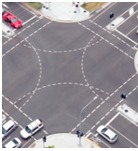
    Exemplarily deployment of level 4 automation use cases characterized by expanded ODDs addressing complex urban scenarios and adverse weather conditions and harmonized validation methods.
  • Obj. 3:
    Enable a safe and cyber-secure operation of future CCAM solutions through system agility, experience-based decision making enabled by distributed intelligence in the edge-cloud continuity focusing on VRUs and ODD transitions.
  • Obj. 4:
    Realize a paradigm shift to integrated, resource efficient and reliable in-vehicle electronics control architectures based on open-source layouts enabling an easier development and integration of connected and automated driving functions.
  • Obj. 5:
    Set up an international cooperation of European OEMs and suppliers to co-design a harmonized ECA layout with harmonized interfaces.

Development Infrastructure

Demonstrator vehicles

Testing Infrastructure

  • Software developement infrastructure
  • HPC cloud infrasturcture for data management
  • XiL testing and validation
  • Access to fully equipped CCAM vehicles including the entrie software stack
  • Access to E/E architectures including sensors and raw data
  • Developement on vehicle level
  • Controlled scenario execution
  • Diverse testing conditions (ODD) applicable

INT SW development infrastructure

IFAG/IFAT Laboratory

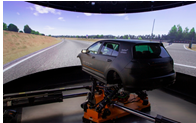
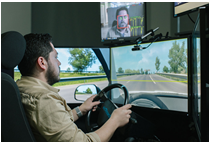
IDI simulator

VICOM simulator

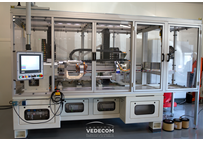
VED Lab environment

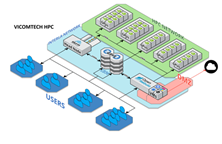
VICOM HPC

Valeo Vehicle

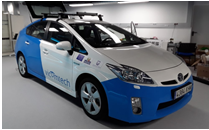
Vicom Vehicle

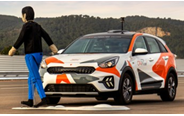
IDI Vehicle

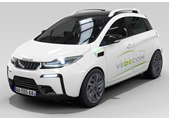
VED Vehicle

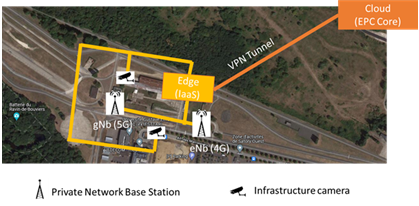
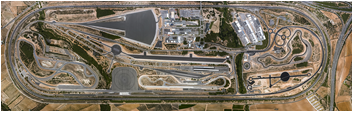
BCCAM testing infrastructure (ES)

VED proving ground (FR)

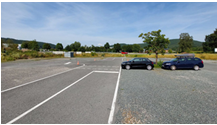
VALEO proving ground (DE)

IDI proving ground (ES)

Development Infrastructure

  • Software developement infrastructure
  • HPC cloud infrasturcture for data management
  • XiL testing and validation

INT SW development infrastructure

IFAG/IFAT Laboratory

IDI simulator

VICOM simulator

VED Lab environment

VICOM HPC

Demonstrator vehicles

  • Access to fully equipped CCAM vehicles including the entrie software stack
  • Access to E/E architectures including sensors and raw data
  • Developement on vehicle level

Valeo Vehicle

Vicom Vehicle

IDI Vehicle

VED Vehicle

Testing Infrastructure

  • Controlled scenario execution
  • Diverse testing conditions (ODD) applicable

BCCAM testing infrastructure (ES)

VED proving ground (FR)

VALEO proving ground (DE)

IDI proving ground (ES)

Targets the design and development of a novel centralized, reliable and upgradable in-vehicle electronic control architecture (ECA).

Paradigm shift to a centralized, upgradable, HW/SW co-design driven ECA
Enables smart data flows and ensures safe and cyber-secure operation
Combines a SW-driven top-down approach with a HW-driven bottom-up approach
Creates the foundation for SdVs realizing a service-oriented architecture
Cooperates along the complete CCAM value chain Explores harmonization and standardization activities Pushes international cooperation and builds on results from previous projects

Targets the design and development of a
novel centralized, reliable and
upgradable in-vehicle
electronic control architecture (ECA)
Paradigm shift to a centralized, upgradable, HW/SW co-design driven ECA
Enables smart data flows and ensures safe and cyber-secure operation
Combines a SW-driven top-down approach with a HW-driven bottom-up approach
Creates the foundation for SdVs realizing a service-oriented architecture
Cooperates along the complete CCAM value chain Explores harmonization and standardization activities Pushes international cooperation and builds on results from previous projects

ADS Timeline

(Re-) Design

O1: E/E architecture design and developement

(Re-) Deploy

O2: Level 4 developement

Operational Use

O3: Safe and secure operation

Evaluate & Analyze

O4: Paradigm shift
O5: International cooperation

Methodology

  • Iterative development
    2 main cycles each consisting of 4 stages
  • - 1st cycle:
    early prototyping and testing
  • - 2nd cycle:
    builds on learnings from the first cycle to extend individual functionalities
  • Key success factor:
    Impact and management activities interface with technical developments

Project Details

Duration in Months
Partners
Involved Countries
Budget in M
Use Cases
Impact Results