
upper image

  • VISION:
    EEA4CCAM aims to empower the safe and cyber secure deployment and operation of CCAM solutions across widespread ODDs through a novel centralized, reliable, cyber-secure and upgradable in-vehicle ECA.
  • MISSION:
    EEA4CCAM will perform a paradigm shift regarding in-vehicle ECAs by developing a centralized and upgradable design that integrates HW/SW co-design, enables smart data flows, and ensures safe and cyber-secure operation.

Partner description:

Infineon Technologies Austria AG (IFAT) is a subsidiary of Infineon Technologies AG – a world leader in semiconductor solutions for power systems and the Internet of Things. With its products and solutions, Infineon drives decarbonization and digitalization. Infineon Austria pools competencies for research and development, production and global business responsibility. As one of the country’s most research-focused companies, Infineon makes a significant contribution to making life easier, safer and greener. Infineon Austria’s recipe for success includes short development periods, the highest quality and a focus on customer-oriented system solutions with a “from product to system” approach. The thematic focal points include the development of power semiconductors and thin wafer technologies, as well as sensors, micromechanics, microcontrollers, new semiconductor materials and contactless security applications.


Role in the project:

IFAT's role in the EEA4CCAM project evolves around hardware building blocks for E/E architectures. Concretely, IFAT is participating in all technical WPs (WP1-4) and is, together with IFAG, contributing towards the specification, conception, development, and demonstration of the mentioned hardware building blocks. Concretely, IFAT, together with IFAG, contributes to the radar zone use case, including interface development and technological advancements regarding high-resolution radars. In addition, IFAT is leading Task 2.1, focusing on hardware-related E/E architecture solution concepts. Furthermore, IFAT is the leader of Task 4.1 related to the demonstration of the developed hardware building blocks.
Objectives

  • Obj. 1:
    Development of a new, centralized, and upgradable design for future in-vehicle ECAs based on HW/SW co-design enabling smart data flows to maximize efficiency, modularity, compatibility, and scalability.
  • Obj. 2:
    Exemplarily deployment of level 4 automation use cases characterized by expanded ODDs addressing complex urban scenarios and adverse weather conditions and harmonized validation methods.
  • Obj. 3:
    Enable a safe and cyber-secure operation of future CCAM solutions through system agility, experience-based decision making enabled by distributed intelligence in the edge-cloud continuity focusing on VRUs and ODD transitions.
  • Obj. 4:
    Realize a paradigm shift to integrated, resource efficient and reliable in-vehicle electronics control architectures based on open-source layouts enabling an easier development and integration of connected and automated driving functions.
  • Obj. 5:
    Set up an international cooperation of European OEMs and suppliers to co-design a harmonized ECA layout with harmonized interfaces.

Development Infrastructure

Demonstrator vehicles

Testing Infrastructure

  • Software developement infrastructure
  • HPC cloud infrasturcture for data management
  • XiL testing and validation
  • Access to fully equipped CCAM vehicles including the entrie software stack
  • Access to E/E architectures including sensors and raw data
  • Developement on vehicle level
  • Controlled scenario execution
  • Diverse testing conditions (ODD) applicable

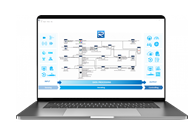
INT SW development infrastructure

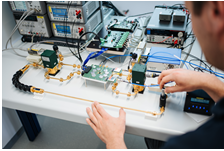
IFAG/IFAT Laboratory

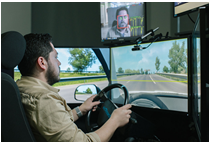
IDI simulator

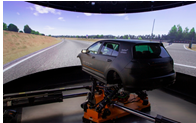
VICOM simulator

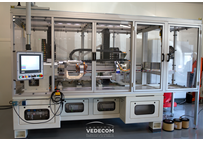
VED Lab environment

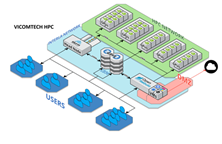
VICOM HPC

Valeo Vehicle

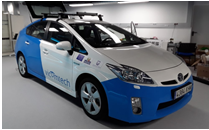
Vicom Vehicle

IDI Vehicle

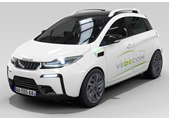
VED Vehicle

BCCAM testing infrastructure (ES)

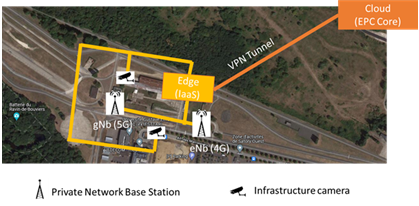
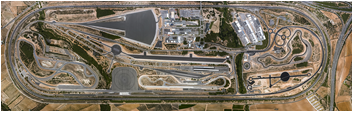
VED proving ground (FR)

VALEO proving ground (DE)

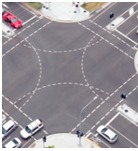
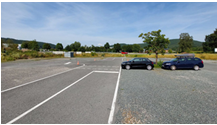
IDI proving ground (ES)

Development Infrastructure

  • Software developement infrastructure
  • HPC cloud infrasturcture for data management
  • XiL testing and validation

INT SW development infrastructure

IFAG/IFAT Laboratory

IDI simulator

VICOM simulator

VED Lab environment

VICOM HPC

Demonstrator vehicles

  • Access to fully equipped CCAM vehicles including the entrie software stack
  • Access to E/E architectures including sensors and raw data
  • Developement on vehicle level

Valeo Vehicle

Vicom Vehicle

IDI Vehicle

VED Vehicle

Testing Infrastructure

  • Controlled scenario execution
  • Diverse testing conditions (ODD) applicable

BCCAM testing infrastructure (ES)

VED proving ground (FR)

VALEO proving ground (DE)

IDI proving ground (ES)

Targets the design and development of a novel centralized, reliable and upgradable in-vehicle electronic control architecture (ECA).

Paradigm shift to a centralized, upgradable, HW/SW co-design driven ECA
Enables smart data flows and ensures safe and cyber-secure operation
Combines a SW-driven top-down approach with a HW-driven bottom-up approach
Creates the foundation for SdVs realizing a service-oriented architecture
Cooperates along the complete CCAM value chain Explores harmonization and standardization activities Pushes international cooperation and builds on results from previous projects

Targets the design and development of a
novel centralized, reliable and
upgradable in-vehicle
electronic control architecture (ECA)
Paradigm shift to a centralized, upgradable, HW/SW co-design driven ECA
Enables smart data flows and ensures safe and cyber-secure operation
Combines a SW-driven top-down approach with a HW-driven bottom-up approach
Creates the foundation for SdVs realizing a service-oriented architecture
Cooperates along the complete CCAM value chain Explores harmonization and standardization activities Pushes international cooperation and builds on results from previous projects

ADS Timeline

(Re-) Design

O1: E/E architecture design and developement

(Re-) Deploy

O2: Level 4 developement

Operational Use

O3: Safe and secure operation

Evaluate & Analyze

O4: Paradigm shift
O5: International cooperation

Methodology

  • Iterative development
    2 main cycles each consisting of 4 stages
  • - 1st cycle:
    early prototyping and testing
  • - 2nd cycle:
    builds on learnings from the first cycle to extend individual functionalities
  • Key success factor:
    Impact and management activities interface with technical developments

Project Details

Duration in Months
Partners
Involved Countries
Budget in M
Use Cases
Impact Results